Ever wondered how some companies effortlessly grow their user base while keeping satisfaction sky-high? The secret might just be a PLG based CRM. Blending product-led growth with smart customer relationship management, this approach is reshaping how businesses scale.
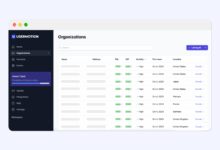
What Is a PLG Based CRM?

A PLG based CRM combines the principles of Product-Led Growth (PLG) with the functionality of a Customer Relationship Management (CRM) system. Unlike traditional CRMs that rely heavily on sales teams to drive engagement, a PLG based CRM empowers the product itself to guide users through onboarding, adoption, and expansion.
Defining Product-Led Growth (PLG)
Product-Led Growth is a go-to-market strategy where the product is the primary driver of customer acquisition, conversion, and retention. Instead of relying on sales demos or marketing funnels, companies let users experience the product directly—often through free trials or freemium models.
- Users sign up and start using the product with minimal friction.
- Value is delivered immediately upon first use.
- Expansion happens organically as users unlock more features.
Companies like Slack, Notion, and Zoom have successfully leveraged PLG to scale rapidly. According to ProductLed, businesses adopting PLG grow 2.5x faster than those using traditional models.
How CRM Fits Into the PLG Model
Traditionally, CRM systems like Salesforce or HubSpot are designed to track leads, manage sales pipelines, and support customer service. But in a PLG based CRM, the focus shifts from external sales touchpoints to internal product usage data.
- The CRM integrates with product analytics to track user behavior.
- Automated workflows trigger based on in-app actions (or inactions).
- Sales and support teams receive real-time alerts about user engagement.
This fusion allows teams to act proactively. For example, if a user hits a usage threshold, the PLG based CRM can automatically assign them to an account executive for upsell opportunities.
“The future of growth isn’t just about acquiring users—it’s about activating them through the product itself.” — Wes Bush, Author of Product-Led Growth
Why PLG Based CRM Is Revolutionizing Customer Engagement
The shift from sales-led to product-led strategies has created a demand for tools that reflect this new reality. A PLG based CRM isn’t just a trend—it’s a necessary evolution for companies serious about scalable, user-centric growth.
From Passive Tracking to Active Guidance
Traditional CRMs are reactive. They log interactions after they happen. A PLG based CRM, on the other hand, is proactive. It uses behavioral data to predict and influence user journeys.
- If a user hasn’t logged in for 7 days, the system triggers a re-engagement email.
- If a team collaborates heavily within the app, the CRM flags them for enterprise plan outreach.
- Feature adoption metrics help identify power users for case studies or referrals.
This level of automation ensures no user falls through the cracks, even in self-serve models.
Reducing Friction in the User Journey
One of the biggest advantages of a PLG based CRM is its ability to minimize friction. By aligning CRM workflows with actual product usage, companies can deliver hyper-relevant experiences without interrupting the user flow.
- In-app messages appear only when a user reaches a specific milestone.
- Onboarding sequences adapt based on user behavior (e.g., skipping tutorials for advanced users).
- Support tickets are pre-filled with usage data, reducing resolution time.
According to a report by Gartner, companies that reduce onboarding friction see up to 50% higher activation rates.
Key Features of a Modern PLG Based CRM
Not all CRMs are built to support product-led strategies. A true PLG based CRM must have specific capabilities that bridge the gap between product usage and customer lifecycle management.
Deep Product Usage Integration
The cornerstone of any PLG based CRM is its ability to ingest and interpret product usage data. This means integrating with tools like Mixpanel, Amplitude, or Pendo to pull in event-level data.
- Tracks key actions like feature usage, session duration, and workflow completion.
- Segments users based on behavior, not just demographics.
- Creates dynamic user profiles that evolve with product interaction.
For example, a user who frequently uses reporting tools might be segmented as a “data-driven manager,” triggering targeted content about advanced analytics features.
Automated Playbooks and Workflows
Manual follow-ups don’t scale in a PLG model. A PLG based CRM uses automated playbooks to guide users based on their behavior.
- Send a tutorial video when a user attempts but fails to complete a key action.
- Trigger a sales call when a team exceeds 10 active users in a free plan.
- Offer a discount if a user churns after a paid trial.
These workflows reduce the burden on customer success teams and ensure consistent messaging across thousands of users.
Real-Time Alerts and Escalations
Timeliness is critical in PLG. A PLG based CRM provides real-time alerts so teams can intervene at the right moment.
- Customer success gets notified when a high-value user shows signs of disengagement.
- Sales teams are alerted when a user hits a usage threshold indicating readiness for upsell.
- Product teams receive feedback loops when users struggle with specific features.
This real-time visibility turns the CRM into a command center for growth, not just a database.
Top PLG Based CRM Platforms in 2024
While traditional CRMs are adapting to PLG, several platforms are built from the ground up for product-led businesses. Here are some of the most effective PLG based CRM solutions available today.
Copilot: The AI-Powered PLG CRM
Copilot is designed specifically for product-led companies. It integrates with your product analytics stack and uses AI to predict user intent.
- Automatically scores leads based on in-app behavior.
- Generates personalized outreach messages for sales teams.
- Identifies churn risks before they happen.
According to user testimonials on G2, Copilot has helped SaaS companies reduce churn by up to 30%.
HubSpot with PLG Add-Ons
While HubSpot isn’t natively a PLG based CRM, its flexibility allows teams to build PLG workflows using integrations.
- Connect with Amplitude or Mixpanel via Zapier.
- Create custom properties based on product usage.
- Use workflows to trigger emails or tasks based on user actions.
HubSpot’s strength lies in its ecosystem. With the right setup, it can function as a hybrid PLG based CRM, especially for mid-market companies.
RevenueHero: Embedded CRM for PLG
RevenueHero takes a unique approach by embedding the CRM directly into the product interface.
- Sales insights appear inside the app for customer-facing teams.
- Users see upgrade prompts contextually, based on their usage.
- Support teams access CRM data without leaving the product.
This in-product experience reduces context switching and improves conversion rates. Early adopters report a 25% increase in trial-to-paid conversion.
How to Implement a PLG Based CRM in Your Business
Adopting a PLG based CRM isn’t just about buying new software—it’s a strategic shift. Here’s a step-by-step guide to ensure a smooth transition.
Assess Your Current Tech Stack
Before implementing a PLG based CRM, evaluate your existing tools. Do you have product analytics? Are your CRM and support systems integrated?
- Identify gaps in data flow between product and customer systems.
- Ensure you’re tracking key events (e.g., login, feature use, invite teammates).
- Map out user journeys to understand where interventions are needed.
Without clean, actionable data, even the best PLG based CRM will underperform.
Define Behavioral Triggers and Playbooks
The power of a PLG based CRM lies in its automation. Define the behaviors that signal user intent.
- Activation: What actions define a “successful onboarding”?
- Expansion: Which usage patterns indicate readiness for upsell?
- Churn Risk: What behaviors precede cancellation?
For example, a user who invites three teammates and creates five projects in the first week is likely highly engaged. Your CRM should flag them for a premium plan demo.
Train Teams on PLG Mindset
A PLG based CRM changes how teams work. Sales can’t rely on cold calls; support must anticipate issues; product teams need to collaborate with growth.
- Conduct workshops on PLG principles.
- Share dashboards showing real-time user behavior.
- Align KPIs across departments (e.g., activation rate, time-to-value).
As Forestry notes, companies that align teams around product usage see faster iteration and higher retention.
Measuring Success with a PLG Based CRM
Implementing a PLG based CRM is only half the battle. The real value comes from measuring its impact on key business metrics.
Key Metrics to Track
Unlike traditional CRMs that focus on lead volume and conversion rates, a PLG based CRM emphasizes product-driven outcomes.
- Activation Rate: Percentage of users who complete key onboarding steps.
- Time-to-Value: How quickly users experience the core benefit of your product.
- Expansion Revenue: Revenue from existing users upgrading or adding seats.
- Churn Rate: Percentage of users who cancel, especially after initial engagement.
- NDR (Net Dollar Retention): A critical PLG metric showing revenue growth from existing customers.
According to Saastr, top-performing PLG companies achieve NDRs above 120%, meaning they grow revenue from existing customers even without new sales.
Using A/B Testing to Optimize Workflows
A PLG based CRM allows you to run experiments at scale. Test different messaging, timing, and offers to see what drives the best results.
- Test two onboarding email sequences to see which improves activation.
- Experiment with in-app prompts to increase feature adoption.
- Compare sales outreach timing (e.g., day 3 vs. day 7 of trial).
Over time, these micro-optimizations compound into significant improvements in conversion and retention.
Building Feedback Loops with Product Teams
One of the most underrated benefits of a PLG based CRM is its ability to inform product development.
- Identify features with low adoption and investigate why.
- Surface user feedback directly from support tickets or in-app surveys.
- Share engagement data to prioritize roadmap items.
This creates a closed-loop system where customer behavior directly shapes product evolution.
Challenges and Pitfalls of PLG Based CRM
While the benefits are compelling, adopting a PLG based CRM isn’t without challenges. Being aware of these pitfalls can help you avoid common mistakes.
Data Silos and Integration Complexity
One of the biggest hurdles is integrating product data with CRM systems. Many companies struggle with fragmented data across tools.
- Product analytics in Amplitude, CRM in Salesforce, support in Zendesk.
- Lack of unified user identity across systems.
- Delays in data syncing, leading to outdated insights.
Solution: Invest in a data warehouse (like Snowflake or BigQuery) or use a CDP (Customer Data Platform) like Segment to unify your data pipeline.
Over-Automation and User Annoyance
While automation is powerful, too many messages can overwhelm users.
- Spammy in-app messages during critical tasks.
- Redundant emails that repeat the same offer.
- Lack of personalization despite behavioral data.
Best Practice: Set frequency caps and allow users to opt out. Use AI to personalize content, not just blast notifications.
Resistance from Traditional Sales Teams
Sales teams used to outbound prospecting may resist a PLG based CRM that shifts control to the product.
- Perception of reduced influence or commission opportunities.
- Lack of understanding of PLG mechanics.
- Reluctance to adopt new tools and workflows.
Mitigation: Involve sales early, show them how PLG can generate higher-quality leads, and align incentives with expansion revenue.
Future Trends in PLG Based CRM
The PLG based CRM space is evolving rapidly. As AI, automation, and data analytics advance, we can expect even more sophisticated tools in the near future.
AI-Driven Predictive Engagement
Future PLG based CRMs will use AI to predict user needs before they arise.
- Anticipate when a user might need help based on navigation patterns.
- Suggest feature upgrades before the user realizes they need them.
- Auto-generate personalized onboarding paths for each user.
Companies like Gong and Chorus are already using AI to analyze user interactions—this will soon be standard in PLG based CRM platforms.
Embedded CRM Experiences
Instead of switching between tools, customer-facing teams will interact with CRM data inside the product itself.
- Sales reps see lead scores while viewing a shared demo link.
- Support agents access user history without leaving the app.
- Product managers view engagement metrics in real time.
This seamless integration reduces friction and improves decision-making speed.
Hyper-Personalization at Scale
With advanced segmentation and AI, PLG based CRMs will deliver individualized experiences to millions of users.
- Dynamic pricing based on usage and intent.
- Customized onboarding flows for different personas.
- Personalized content recommendations within the app.
The goal is to make every user feel like the product was built just for them—without manual intervention.
What is a PLG based CRM?
A PLG based CRM is a customer relationship management system designed for product-led growth strategies. It integrates product usage data with CRM functionality to automate engagement, improve onboarding, and drive expansion based on user behavior.
How does a PLG based CRM differ from traditional CRM?
Traditional CRMs focus on sales-led processes like lead tracking and pipeline management. A PLG based CRM prioritizes product usage data, enabling automated, behavior-driven engagement and reducing reliance on manual sales outreach.
Can small businesses use a PLG based CRM?
Absolutely. In fact, small and mid-sized businesses often benefit the most from PLG based CRMs because they allow for scalable growth without a large sales team. Tools like Copilot and RevenueHero are designed to be accessible and affordable.
What are the best tools for a PLG based CRM?
Top options include Copilot, RevenueHero, and HubSpot (with PLG integrations). The best choice depends on your tech stack, team size, and growth stage.
How do I measure the ROI of a PLG based CRM?
Track metrics like activation rate, time-to-value, expansion revenue, and net dollar retention. Compare these before and after implementation to assess impact.
Adopting a PLG based CRM isn’t just a tech upgrade—it’s a strategic shift toward user-centric growth. By aligning your CRM with product usage, you create a system that scales efficiently, delivers value faster, and turns users into advocates. Whether you’re a startup or an enterprise, the future of customer engagement is product-led. The right CRM can make all the difference.
Further Reading:
